Quantum Learning MachinesLabPath

LabPath

Assign a lab. Students experiment. You see how they think.

1Teacher assigns
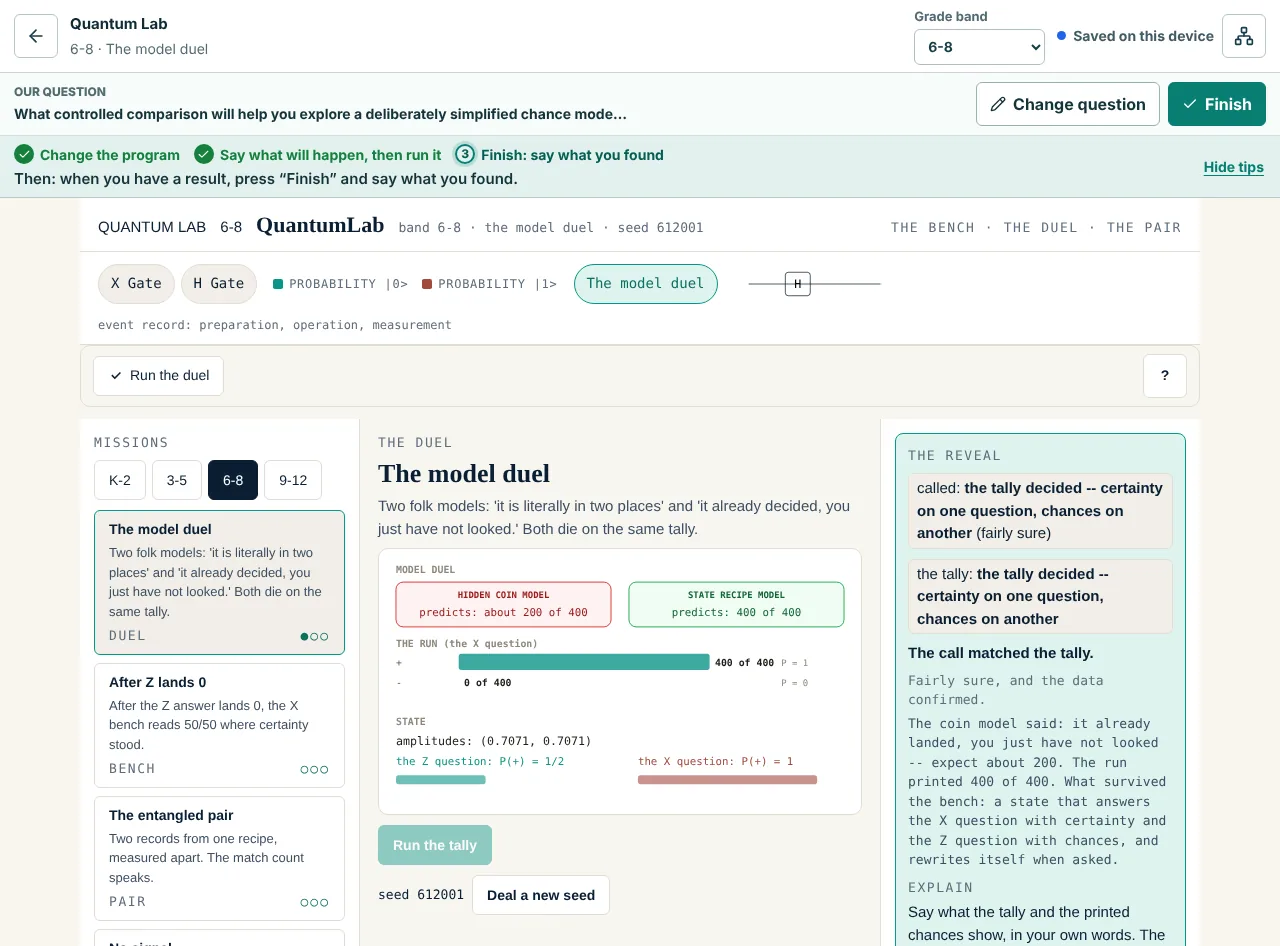
Quantum Lab, The model duel, after a student runs the tally: the hidden-coin model predicted about 200 of 400, the state-recipe model predicted 400 of 400, the run printed 400 of 400, and the reveal shows the student's call matched
2Student investigates
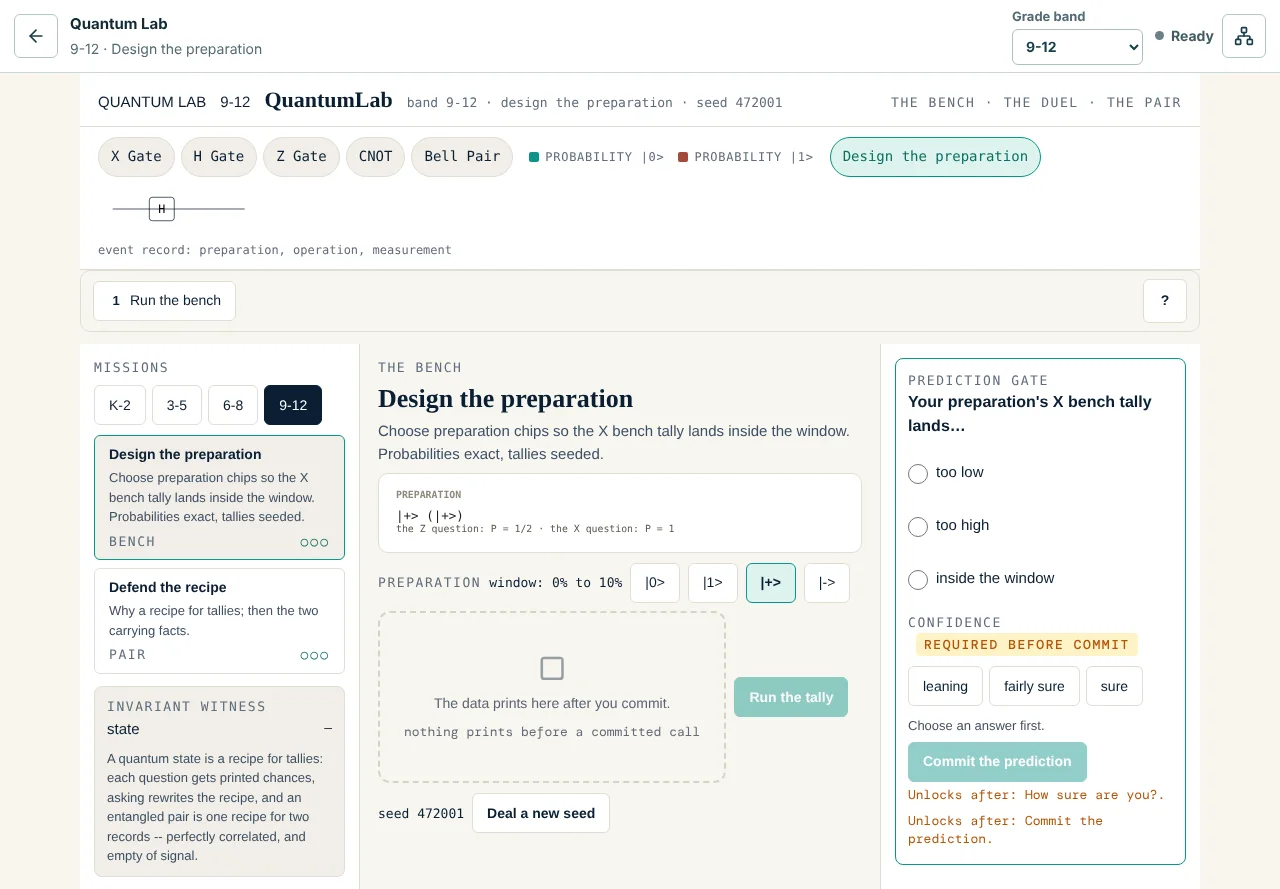
Quantum Lab, grades 9-12: a student designs a qubit preparation, predicts where the tally lands, and commits with a confidence level before running it
3Teacher acts
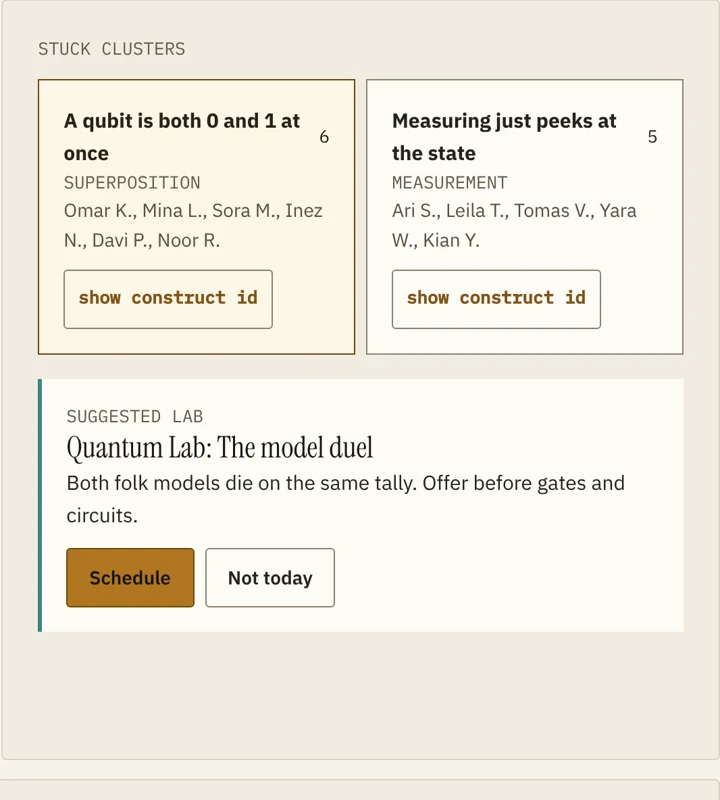
TeacherOS, synthetic class: two quantum misconception clusters (a qubit is both 0 and 1 at once; measuring just peeks) and Quantum Lab's model duel as a suggested lab the teacher can schedule or decline

Try a World.

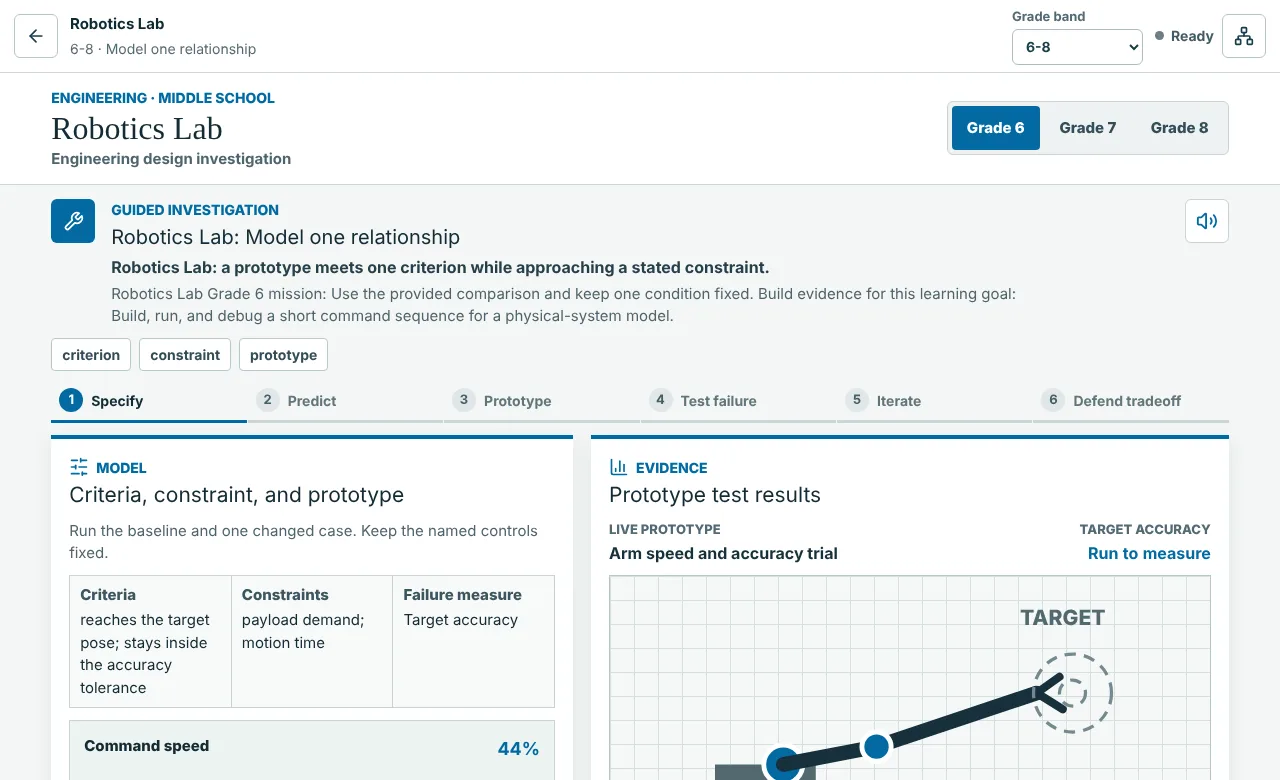
Robotics Lab, grades 6-8: students set a command speed, run a robot arm toward a target, and test the prototype against a criterion and a constraint.
6–8: Robotics Lab. Build, run, debug.
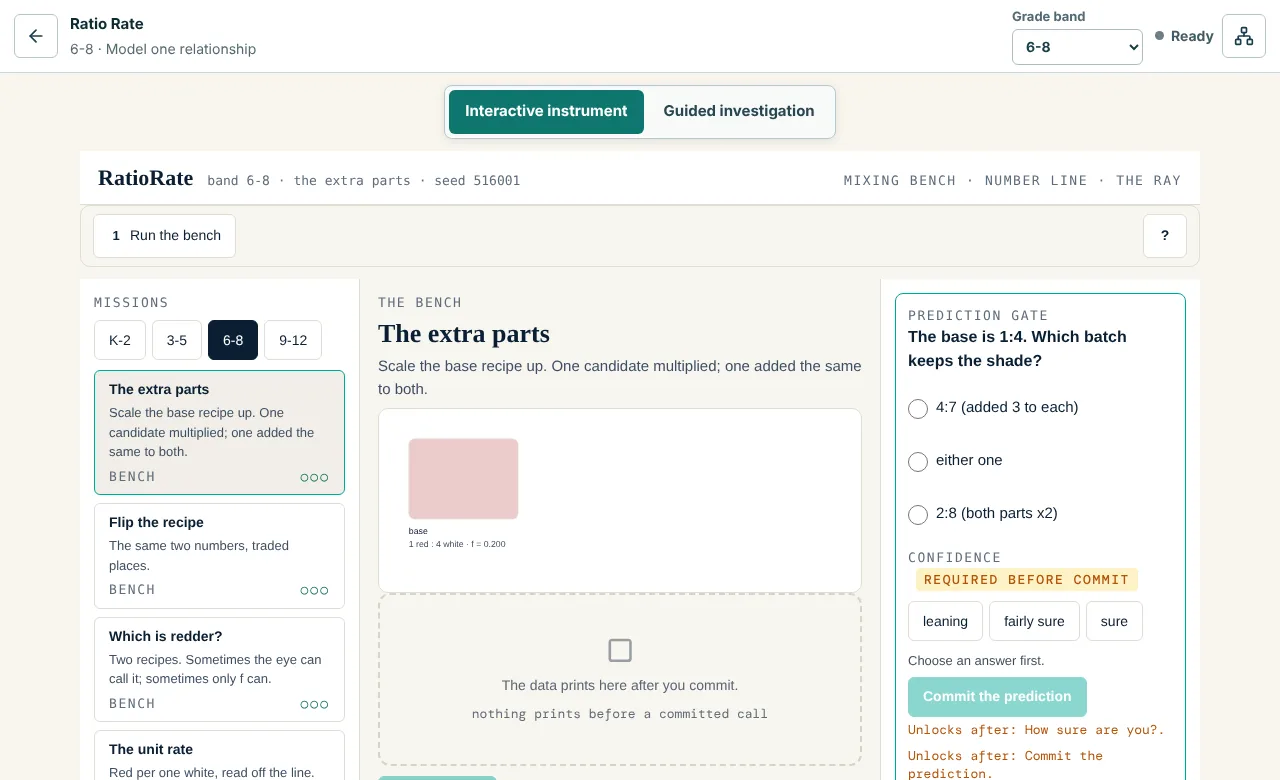
Ratio Rate, grades 6-8: students predict which scaled recipe keeps the same shade, commit with a confidence level, then mix to check.
6–8: Ratio Rate. Predict, then mix.

See each student’s path.

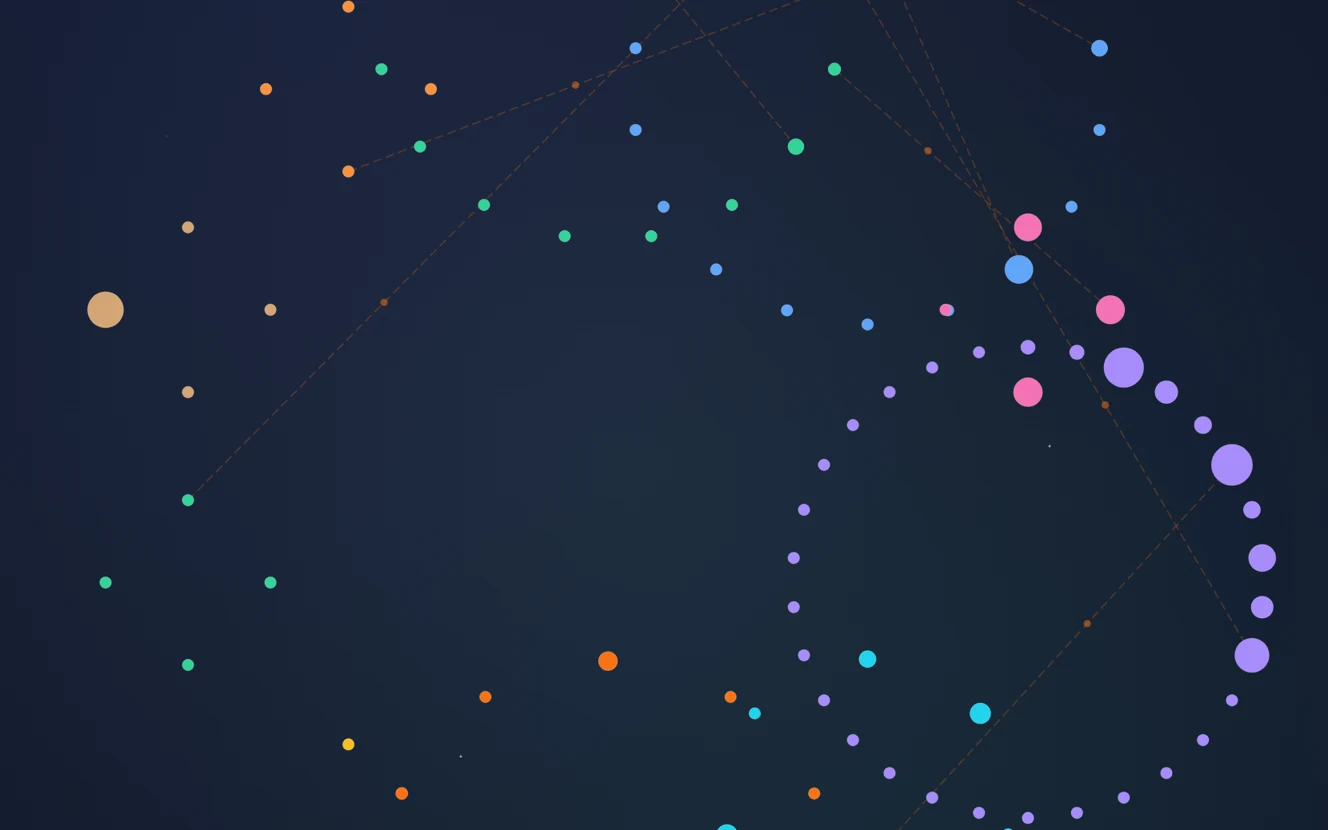
The LabPath Learning Graph filtered to prerequisite links: 100 Worlds as coloured dots grouped by subject, with dashed lines from each World to the ones it builds on.
100 Worlds, linked by what builds on what.
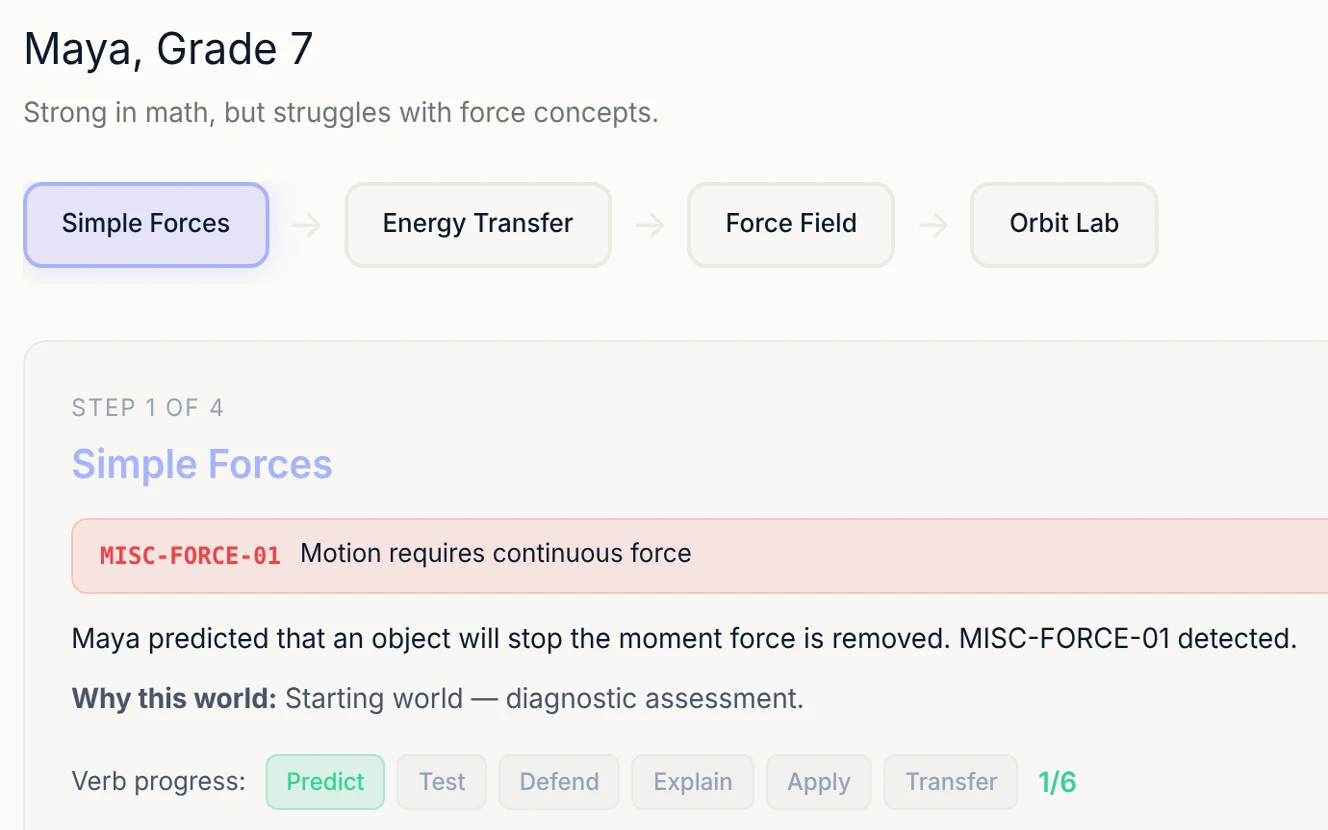
Example student journey: Maya, Grade 7, moves from Simple Forces to Energy Transfer, Force Field and Orbit Lab; the first World flags the misconception that motion requires continuous force.
Example student journey. Sample data.
Book a district walkthrough